Heart Rate Variability Biofeedback
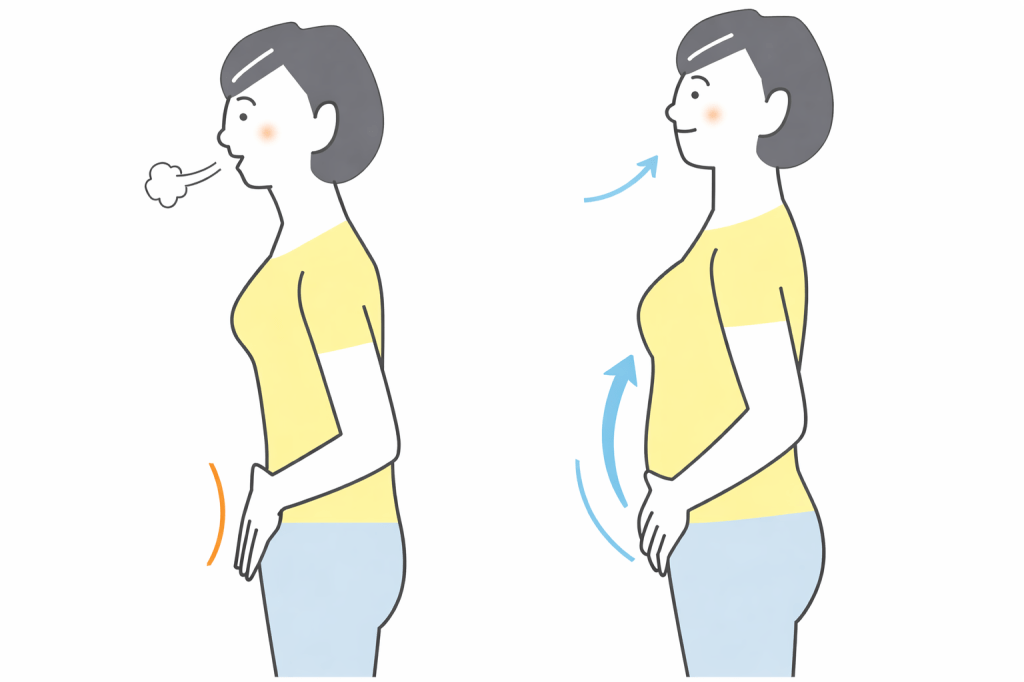
Breathing for one 10-second cycle (generally, “breathe in for 4 seconds and breathe out for 6 seconds”) can be expected to produce resonance between the systems involved in heart rate variability and those involved in blood pressure variability, and maximize heart rate variability (heart rate fluctuation).
Multiple studies have shown that when performed continuously, it can relieve pain, improve depression, anxiety, and stress, and improve the quality of sleep.
One-Nose Breathing Technique
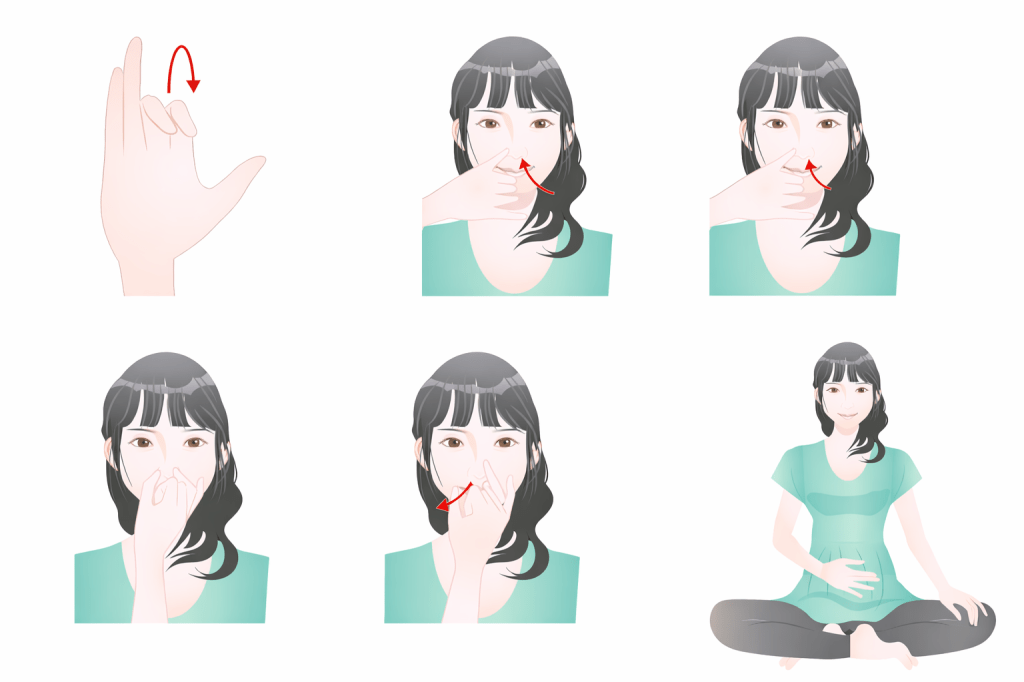
The one-nose breathing technique is a breathing method that helps regulate the autonomic nervous system by alternately breathing through the left and right nostrils.
Breathing through the right nostril is believed to activate the sympathetic nervous system (excitement, tension, activity), while breathing through the left nostril activates the parasympathetic nervous system (relaxation, rest, recovery).
After 3-5 minutes, you will feel calm and your head will be clear.
Engaging with Music
Music-related activities are also an effective and accessible way to reduce stress. Many studies have examined the relaxing effects of listening to music. Research from Germany has shown that the mental health benefits of music are nearly equivalent to those of exercise and physical activity programs. For people who are not comfortable with exercise, or who are too busy to find time for it, listening to music, singing, or playing an instrument can be an easy and practical way to reduce stress.

Watching Nature Images and Videos
Simply spending a few minutes looking at images or videos of nature has been shown to reduce stress.
Research from Norway has reported that watching nature videos for about 20 minutes can significantly lower heart rate and calm the autonomic nervous system by activating the parasympathetic (relaxation) response.
We recommend bookmarking relaxing nature videos on your computer or smartphone, so you can easily enjoy them whenever you need a short break.

 WellAge - 更年期障害予防~自律神経を整え、心身に活力を