Nutrition Guide for Healthy Aging
Supporting Well-Being and Performance During Midlife
Introduction
From the age of 40 onward, both women and men experience hormonal and autonomic nervous system changes that may affect physical and mental health.
Common concerns include:
- Persistent fatigue
- Sleep disturbances
- Reduced concentration
- Unintended weight gain
Many of these changes can be improved by establishing healthy dietary habits.
This guide introduces practical nutritional strategies to support long-term health, vitality, and workplace performance.
1. Supporting Hormonal Balance Through Nutrition
During midlife, the production of estrogen and testosterone gradually declines, which may lead to decreased energy, mood changes, and reduced motivation.
Key Nutrients
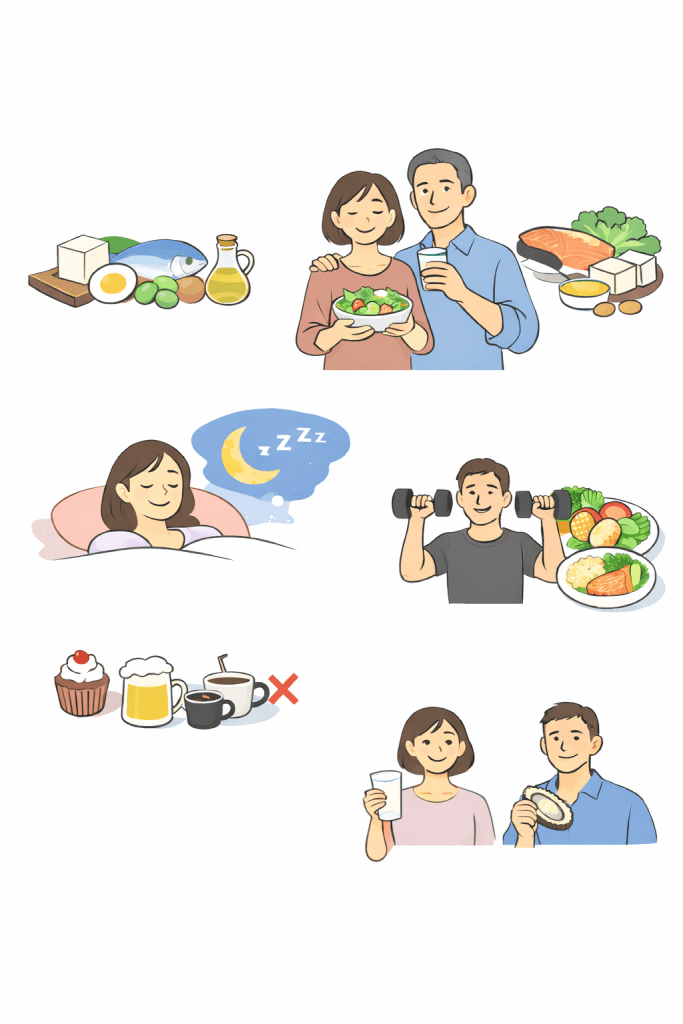
- Soy isoflavones (tofu, natto, soy milk)
- Healthy fats (fatty fish, nuts, olive oil)
- Protein (eggs, fish, meat, soy products)
Practical Tips
Aim to include both protein and soy-based foods at every meal.
Examples:
Breakfast: Natto and eggs
Lunch: Fish-based meals
Dinner: Tofu and chicken
2. Regulating the Autonomic Nervous System and Improving Sleep
Hormonal changes may disrupt the autonomic nervous system, contributing to anxiety, irritability, and poor sleep quality.
Supportive Nutrients
- B vitamins (pork, whole grains)
- Magnesium (nuts, seaweed)
- Tryptophan (dairy products, bananas)
Practical Tips
In the evening, focus on warm and light meals.
Examples:
Miso soup, steamed vegetables, tofu dishes
Warm beverages or plain hot water before bedtime are also recommended.
3. Maintaining Metabolism and Physical Strength
After midlife, basal metabolic rate declines, increasing the risk of weight gain and muscle loss.
Three Basic Principles
- Stabilize blood sugar levels
- Maintain muscle mass
- Reduce chronic inflammation
Recommended Balance
Staple foods 20% : Main dish 30% : Side dishes 50%
Example:
Mixed-grain rice, fish, vegetable soup
4. Habits to Limit
The following habits may worsen fatigue and menopausal symptoms:
- Excessive intake of sugary foods
- Frequent consumption of fried foods
- Excessive alcohol intake
- Overconsumption of caffeine
Total restriction is unnecessary, but moderation is strongly encouraged.
5. Gender-Specific Recommendations
For Women
- Prioritize iron and calcium intake
- Maintain daily soy consumption
- Focus on bone and anemia prevention
Recommended foods:
Leafy greens, tofu, whitebait
For Men
- Prioritize zinc and protein intake
- Manage visceral fat
- Moderate alcohol consumption
Recommended foods:
Oysters, lean meat, eggs
Closing Message
Health is built through small daily choices.
Improving dietary habits is one of the most reliable investments in your future well-being.
We hope this guide supports your journey toward sustained health, vitality, and professional performance.

